Author and Scriptwriter

'Among the most important writers of contemporary British horror.' -Ramsey Campbell

Friday, 19 June 2020

The Lockdown with... Gary McMahon


Gary McMahon writes stories. Some of them have been published and received favourable reviews. He is also the author of several novels, and hope to write another one soon. He holds a black belt in shotokan karate and watches way too many horror movies for his own good.


1. Tell us three things about yourself.

I'm a black belt in shotokan karate. I have a torn meniscus. Legally, my middle name is Zed.


2. Many writers have said the COVID-19 outbreak and the lockdown have made it harder for them to create. Have you found this? Has the outbreak affected you as a writer and if so, how?

The lockdown has put me into a kind of creative paralysis. I can't write. I can't even read. I think it's more to do with issues I'm having with my day job than anything else – I moved companies last summer and it's proven to be the biggest mistake of my career. Because of the COVID crisis, I'm now stuck there.


3. What was the first thing you had published?

A short story in a small press 'zine called Nasty Piece of Work.


4. Which piece of writing are you proudest of?

My latest collection, Some Bruising May Occur.


5. …and which makes you cringe?

Lots of early stuff that, thankfully, I've forgotten.


6. What’s a normal writing day like?

I don't have writing days. Writing hours or minutes; like stolen moments with an illicit lover.


7. What work of yours would you recommend for people on lockdown and in need of a good book?


8. What are you working on now?

A novella called You Are Not Like Us. I've also been working for five or six years on a haunted house novel called The Quiet Room.


Monday, 15 June 2020

The Lockdown with... Tiffani Angus


Tiffani Angus is a Senior Lecturer in Publishing and Creative Writing at Anglia Ruskin University in Cambridge and the General Director for the Anglia Centre for Science Fiction and Fantasy. She’s the author of the debut Threading the Labyrinth (Unsung Stories, 2020) and of several short stories in a variety of genres. She doesn’t currently have a garden, but that’s okay because she’s more a fan of going to gardens that other people have built. You can find more about her writing at her website and follow her on Twitter or Instagram.

1. Tell us three things about yourself.
This question always makes me wonder whether the mundane is too boring or the weird too ridiculous. Let’s see: the mundane is I was born in the American Southwest and do NOT miss the heat (I’m a human fern so British weather is just fine with me pleaseandthankyou); slightly edging toward weird is that decades ago one of my closest friends dubbed me Martha Anne—a combination of Martha Stewart and Anne Rice; and random is that Grady Hendrix called my writing style a ‘fucked up midwestern gothic sensibility’, which I try to live up to. Oh, and a bonus mundane: I love roller coasters but don’t like Ferris wheels.

2. Many writers have said the COVID-19 outbreak and the lockdown have made it harder for them to create. Have you found this? Has the outbreak affected you as a writer and if so, how?
The lockdown has made it harder to write because I am now home working, and I teach creative writing at uni, so there is no break from the office. Plus, teaching creative writing means spending many of my working hours helping my students figure out how to improve their writing—I have to be “on” when interacting with them—and that can be draining when it’s time for me to work on my own writing. My attention span has been shot and I find myself moving from thing to thing after a short bit of concentration, which doesn’t exactly help me with finishing the manuscript I’m working on now! But I know I’m not alone in this; a lot of my writer friends are finding they’re dealing with the same feelings.

The main way the lockdown negatively affected my writing is by undermining my debut. My novel, Threadingthe Labyrinth, was supposed to come out April 13, with launches at a convention and a bookstore, and a big party I was going to throw where I live, etc., and of course that was all cancelled. Then the publisher and I decided to release the ebook on time but push the paperback release to July because that certain big box online store moved shipping physical books way down on its list of importance. So my launch has been strangely elongated and a bare simmer instead of having the chance to give off some steam. Hopefully I can celebrate it in person in public somehow later this summer.

3. What was the first thing you had published?
The first story I had published was “If Wishes Were Horses” at Strange Horizons in 2009 (and you can still read it there for free!). In late 2008, I went to my first ever SFF writing workshop, Viable Paradise, and took a draft of that story. Afterward, I decided to send it out, and SH took it. It’s very short so I give it to students to show them that a story doesn’t need to be a million words long, but I felt like a one-trick pony because it was a long time before I sold another story.

4. Which piece of writing are you proudest of?
Threading the Labyrinth, definitely. The basic description is that it’s about 400 years in a haunted English garden, so it took a lot of research, but I think I ended up with something special thanks to many people who helped me develop and edit it. And I can look back on it and feel proud that I wrote it and it’s published *and* I got a PhD with it (well, in part—I also wrote a 40,000-word critical commentary to go with it). I got my box of author copies the other day and it’s still surreal to see them.

5. …And which makes you cringe?
Luckily I was a bit older when I started publishing, and I had some experience in workshops, etc., and had heard the warnings, so I haven’t had a long history of publishing that includes possible clunkers at the beginning of it. I did publish erotica, which some people would cringe at, but I rather like that story—I was stepping out of my comfort zone! But I do cringe when I think about a bad contract I signed that gave a publisher a story of mine for 3 years that I never made a dime off of. I chalk that up to a learning experience and use it to warn students what to watch out for.

6. What’s a normal writing day like?
I don’t have “writing days” unless I completely clear the decks and get to concentrate on just writing. That happens incredibly rarely because of my job and life stuff. I would LOVE to be able to do that “writerly” thing of taking 6 months off to see what I could finish, and I envy writers I know who get to do it full time (but I know that is extremely rare). So, I tend to write in dribs and drabs when I’ve got time and brain space. Usually what happens is I get a weekend or a solo retreat if my partner is out of town; I will make sure I have food in so I have no reason to go out and I will sit in my pajamas, unshowered, and just GO. I write fast when the stars are aligned and have gotten 10K written in about 24 hours this way.

But I don’t have any rituals; no necessary coffee (smells great, tastes like poo) or tea or cigs; having some good dark chocolate with salt nearby helps; and I listen to music or noise without lyrics because otherwise I sing along as I write (which isn’t the best habit!). I don’t tend to edit as I go; I believe in just barfing it out on the page and then going back to figure exactly what in the hell I wanted to write the story about. That approach took a long time to learn how to do. Then I go back with that idea—the theme(s) or the EGG as I call it—and edit so I can answer the ‘so what?’ question.

7. What works of yours would you recommend for people on lockdown and in need of a good book?
Definitely Threading the Labyrinth, especially if they miss big gardens or even outdoors and are worried about their place in the big scheme of things, in the future, and need reminding that our lives are about slowly building our stories. If they want more garden-related reading with a weird twist, they should check out my short stories “Fairchild’s Folly” (about correspondence between Thomas Fairchild and Carl Linnaeus, published in Irregularity), “What Cannot Be Described” (about Maria Sibylla Merian in Suriname in search of a mysterious moth, published in The Book of Flowering), and “On Tradescant Road” (about a time capsule that doesn’t move chronologically, starring John Tradescant, in BFS Horizons #4). Having said that, some of my other stories are available online—for free!—from various publishers; you can find links here

8. What are you working on now?
I am trying to finish a novel I started about a decade ago, before I started Threading. It’s about an apocalypse, so not the best topic to be writing about right now, but I am close to the finish line. It isn’t a pandemic, though, so maybe it has a shot! It’s about women and children left behind after everything goes to hell, and about a mother and daughter trying to find each other in this new world. I was inspired to write it, in part, by that saying “If women ran the world there’s be no wars”—I wanted to call shenanigans on that and explore the darker side of things. For fun I call it Little House at the End of the World and writing it has, in part, fed into (and been fed by) my research into women’s bodies in apocalyptic fiction; I have become known in my circle as the “tampons in the apocalypse” person. I can think of worse things!

Friday, 12 June 2020

The Lockdown (Mr and Mrs Edition) with... John Llewellyn Probert

John Llewellyn Probert's latest book is the British Fantasy Award-nominated The Last Temptation of Dr Valentine, the second sequel to his British Fantasy Award winner The Nine Deaths of Dr Valentine. He won the Children of the Night Award for his portmanteau book The Faculty of Terror and his current projects include two more titles utilising the same structure. He is also at work on two novels and two non-fiction film books while continuing to write about current releases at his site, Houseof Mortal Cinema. After all six books have been finished he intends to sleep for a bit. But he probably won't.

1. Tell us three things about yourself. (If you’ve done this previously, ideally tell us three different things than last time!) I started wearing a monocle for a bit of fun but I actually find it incredibly practical. I wear a lot more waistcoats than I used to, but not all at the same time I own more shoes than my wife does.

2. Many writers have said the COVID-19 outbreak and the lockdown have made it harder for them to create. Have you found this? Has the outbreak affected you as a writer and if so, how?
It hasn't, really. My writing has always been an escape from the real world and there's no reason for that to have changed. Obviously I'm still going to work and as work is even more stressful than ever the need for release is all the greater and so when I get home the keyboard has been on fire most evenings. Let's see if anything any good comes of it all!

3. What was the first thing you had published?
When I was in school I wrote for the school magazine (and was one of the editors for two years) so my first published piece would probably have been a review of the annual organ recital in the school chapel.

4. Which piece of writing are you proudest of?
I don't know about proud, but the writing 'thing' I'm perhaps the most pleased I've ever done is my film review site House of Mortal Cinema. I had been tinkering with the idea for some time & eventually decided to go for it, especially once Thana supplied the title. It will be nine years old this year and I still love doing it. It's made me friends and industry contacts, plus the odd book contract, as well as causing me to watch a lot of stuff I would have been on the fence about otherwise.

5. …and which makes you cringe?
On bad days everything.
On good days nothing, because if I don't love my stuff how can I expect anyone else to?

6. What’s a normal writing day like?
I rise with the wind, remembering that high fibre Jacobs Crackers should be consumed one at a time and not by the packet load. Then it's into the bathroom and...
Sorry.
7am Rise
7.02am Champagne! Champagne for Everyone!
10.30am Get off the phone to the Queen after listening to her woes.
11.00am Lunch! Champagne and Truffles for everyone!
3.00pm Sit down at computer. Decide what films to watch for the rest of the day.
5.00pm Tea! Champagne and escargots for everyone while watching creaky Monogram 'classics' from 1942. Midnight. Think I should have written but it can wait until tomorrow.

7. What work of yours would you recommend for people on lockdown and in need of a good book?
I'd suggest Dead Shift from Horrific Tales Publishing. It's an easy read (I like to think all my stuff is) and lots of fun, even though it's set in a hospital. I'm planning to revisit that world with a longer book, by the way

8. What are you working on now?
It has to be kept secret I'm afraid – all six books! One has been delivered to a US publisher and I'm waiting to hear, another that I've been contracted for I'm getting finished right now. The others are in various stages of scribble but suffice to say they're all more of the same kind of thing I've been writing for years because I'm old now & I can't change, nor would I want to. Oh, I do have a new story coming out in...oh dear I don't think I'm allowed to talk about that either. What about my 'British Kolchak' story in...no. It's all a bugger this pre-publication secrecy thing, isn't it? Anyway plenty of stuff to come and if I'm the only one who likes any of them well at least they have one friend.

Monday, 8 June 2020

The Lockdown (Mr and Mrs Edition) with... Thana Niveau


Thana Niveau is a horror and science fiction writer. Originally from the States, she now lives in the UK, in a Victorian seaside town between Bristol and Wales. She is the author of the short story collections Octoberland, Unquiet Waters, and From Hell to Eternity, as well as the novel House of Frozen Screams. Her work has been reprinted in Best New Horror and Best British Horror. She has been shortlisted three times for the British Fantasy award – for Octoberland and From Hell to Eternity, and for her story “Death Walks En Pointe”. She shares her life with fellow writer John Llewellyn Probert, in a crumbling gothic tower filled with arcane books and curiosities. And toy dinosaurs.

1. Tell us three things about yourself. (If youve done this previously, ideally tell us three different things than last time!)
I’m (1) a dog person (2) a tea person (3) a morning person.


2. Many writers have said the COVID-19 outbreak and the lockdown have made it harder for them to create. Have you found this? Has the outbreak affected you as a writer and if so, how?
I’ve found it nearly impossible to create anything. When the world fell apart, I was halfway through writing a Lovecraftian eco-horror piece set in Siberia. It was oddly comforting to “escape” into that pandemic-free world, but at the same time it was challenging to do the actual creative work, since all my brain wants to do is obsess and worry. I was able to finish the story (and meet the deadline!), but I haven’t written anything since, or felt inspired to. I know I’m not alone in this, and misery loves company. I’m sure the muse will return when she’s ready. I want to write about dinosaurs and spaceships and get as far away from our dystopian reality as I can!


3. What was the first thing you had published?

The Death of Dreams" - a grim futuristic story where your dreams can be recorded and exploited by the tabloid press. I wrote it for Joel Lane, and it was published in the charity anthology Never Again.


4. Which piece of writing are you proudest of?
I'm still very proud of my first SF publication, “The Calling of Night’s Ocean”, told mostly from a dolphin’s POV. But I’m also proud of “Octoberland”, the title story in my last collection. It’s the most personal story I’ve ever written.

5. …and which makes you cringe?
I’m not sure it’s deserving of cringes, but there was that epic fanfic saga I wrote when I was 12 or so. It started off as a Star Trek / Blake’s 7 team-up, but it soon spiralled into a game of seeing how many characters from different universes I could cram into it. I’ve only recently been properly introduced to Doctor Who, but Tom Baker’s Doctor was in there, along with Leela. Also included were characters from V, ElfQuest, Robotech, the Man (and Girl) from UNCLE, among many others.The Young Ones even turned up at one point! Okay, maybe it’s a BIT cringe-worthy.

6. Whats a normal writing day like?
Let me cast my mind back to when “normal” was a thing . . . My ideal writing day would be – getting up early, sometime between 4.30 and 6 am. I love that time of the morning, when it feels like I’m the only person awake and the world is mine. A cup of Earl Grey (one of many varieties – I’m a total tea nerd), followed by a cup of green tea (again, one of many varieties – 20+ at last count), and some music to write to, usually film scores or Tangerine Dream. Then I’ll stare at the blinking cursor for ages, trying to remember why I do this. LOL

7. What work of yours would you recommend for people on lockdown and in need of a good book?
If you want a haunted house novel, you could show your love to The House of Frozen Screams. And if you prefer short stories, Octoberland has you covered!

8. What are you working on now?
I’d love to say I’m working on something, but right now I’m just trying to stay sane. (Wow, that sounds bleak.) Lest you think I’m just paralysed by fear and cowering in the shadows . . . John and I are having a lot of fun playing Magic: the Gathering and watching tons of movies and series. There are books too, of course. And jigsaw puzzles. And audiobooks and podcasts. I’m an introvert, so the isolation isn’t as hard for me as it is for others, but it’s still taken a toll on my creativity.

Friday, 5 June 2020

Things Of The Week: Friday 5th June 2020

So, various things have been going on: I've been meaning to blog about them but life's kept getting in the way - or lack of energy and spoons has. Anxiety, depression and a monumentally buggered-up sleep-cycle have been the main culprits in that respect.

Notwithstanding, I've been keeping on keeping on as best I can. I'm plugging away at a new novel and have made notes for the next project. As my Facebook followers will know, I've been tinkering on and off with a cartoon strip of sorts, Llewellyn the Lamprey (which is all Lauro 'Tank Girl' Mauro's fault) and ended up doing a Llewellyn music video after watching too many Sharknado films. Despite the spoon shortage, I ended up using it as a calling card when some Facebook friends needed a music video of their own for a protest song about the appalling events in the USA (referring, for the avoidance of doubt, for the thuggish and nazi-like behaviour of US police officers and their vile, barely-human apology for a President) and knocked together something.

In other, more prosaic news, I've revived the blog's mini-interview feature, The Lowdown, but modified slightly: COVID-19 has changed a lot of things for a lot of people, including, for many writers, not only how they work but if they work at all. The new interview, The Lockdown, focuses not only as an introduction to the writers involved and how they're getting on but takes a look at how various writers (and, in future, editors and artists) are dealing with the situation. The series kicked off last week with interviews with Matthew M. Bartlett and Conrad Williams; this week we've picked the brains of Tim Major and Marion Pitman.

The re-release of my story collection And Cannot Come Again has been delayed by various issues, many COVID-related, but I am delighted to announce that both the hardback and the ebook are now available, featuring Ben Baldwin's sensation cover art and two new stories that did not appear in the original ChiZine edition. This paragraph may have taken longer to type than it should have because I kept stopping to drool over the pictures of the book. Ahem.

Moving on...

IMPORTANT: Please take note that any paperbacks of And Cannot Come Again currently for salenot the new edition from Horrific Tales. These do not contain the new stories 'In The Shelter' and 'Black Is The Morning, White Is The Wand', and the proceeds won't go to Horrific but to ChiZine from whom, for well-documented reasons, I would prefer readers not to buy the collection from.
on Amazon are the original ChiZine edition,

Author and editor Mark Morris has long cherished a dream of editing a major non-themed UK horror anthology, beginning with the first two volumes of The Spectral Book of Horror Stories, continuing through New Fears 1 & 2 with Titan Books, and now culminating with After Sundown, the first in an ongoing series from those fine folk at Flame Tree Publications. The cover art and TOC have now been revealed, and I'm delighted to announce that my story 'We All Come Home' appears therein, alongside works by C.J. Tudor, Laura Purcell, Sarah Lotz, Angela Slatter, Ramsey Campbell, Robert Shearman, Catriona Ward, Michael Bailey, Tim Lebbon, Alison Littlewood, Elana Gomel, Michael Marshall Smith, Rick Cross, Thana Niveau, Grady Hendrix, John Langan, Stephen Volk, Jonathan Robbins Leon and Paul Finch. All incredible writers, and it's fantastic to be in such great company. 

I've put two new stories up on Patreon: you can read 'The Garden', a story of finding peace in a time of war and chaos, there or on Ko-fi, and it's also available as an audio reading. The second story, 'In The Service Of The Queen', concerns a man who can put right some of the damage left behind by war, but at a terrible cost to himself. This story is paywalled, but you can become a subscriber and access it and a number of other exclusive works from as little as a dollar a month.

The 'how-to' of writing is always fascinating, for me anyway, especially since my last couple of books have been very much a case of 'Pantsing' rather than 'Planning'. While I'm not a massive Jack Reacher fan, I'm currently reading the 20th novel in Lee Child's mega-selling series, Make Me, as a prelude to checking out Andy Martin's book Reacher Said Nothing: Lee Child and the Making of Make Me. Child is, famously, about as big a Pantser as you can get, typically starting his books with nothing in mind beyond an opening scene and maybe a title: Martin proposed a unique experiment in which he would actually watch Child creating his new book as he went along, observing and taking notes.

,Most of us might find such a proposal - however fascinating as an idea - unbearable in practice: after all, writing is about as private an activity as you can get. I've written in public places like coffee shops on many occasions (although that feels like a distant dream right now!) but never with someone actually looking over my shoulder. That level of self-consciousness is more often than not the kiss of death. Nonetheless, Child accepted the idea enthusiastically, and Reacher Said Nothing is the result. Martin talks about the process in this article here, which fascinated me enough to want to read his book - and, before I did, Make Me itself.

Another piece on the process is this one from Michael Moorcock: How To Write A Novel In Three Days. This one's from the other end of the scale, that of a Planner - and is an intriguing look at the nuts and bolts of writing a novel.

I found both pieces fascinating. Take a look yourself if you're stuck for some weekend reading matter, and see if you agree!

All the best,

Simon.

The Lockdown with... Marion Pitman


Born in the middle of the 20th century, prevented by depression and anxiety from ruling the world, Marion Pitman likes detective stories, folk music and watching cricket. She sells second-hand books, more in the interests of re-homing the books than of making a living. She also writes poetry, which is rather like being a manufacturer of high-class gas mantles, however good they are nobody wants them.

1. Tell us three things about yourself.

a. One of my favourite places to write (in previously normal times) was the busy lounge of a large hotel.
b.I LOVE hot weather, if I could I would spend six months in each hemisphere and not do winter at all.
c. I have never managed to learn to drive, despite wearing out three driving instructors.

2. Many writers have said the COVID-19 outbreak and the lockdown have made it harder for them to create. Have you found this? Has the outbreak affected you as a writer and if so, how?

On the one hand, the anxiety makes it harder to concentrate, but on the other, I have more time, as I am staying with my partner rather than at my house; and I have always found writing to be a good refuge from unmanageable reality. I've written and submitted more short stories than usual, certainly.

3. What was the first thing you had published?

Well, ignoring poetry in school and parish magazines, it was either 'Dead and Alive' in the Fontana Book of Horror, or 'The Seal Songs' in 19 magazine. Both about 1979, if memory serves.

4. Which piece of writing are you proudest of?

Eek, there's a question. Probably the unpublished novel that is too short for any market.

5. …and which makes you cringe?

Probably another unpublished novel that I can hardly bring myself to look at, it's so full of me being depressed.

6. What’s a normal writing day like?

Sorry, you'll have to ask somebody normal.

7. What work of yours would you recommend for people on lockdown and in need of a good book?

Well, my short story collection, Music in the Bone (Alchemy Press) has been well spoken of, and has something for everyone – fantasy, horror, SF, humour, Western...

8. What are you working on now?

Good question. Just finished my second Sherlock Holmes pastiche (both of which should be due out before too long), and an occult detective story. Wondering if I should get back to the too-short novel and see if I can lengthen it...

Monday, 1 June 2020

The Lockdown with... Tim Major

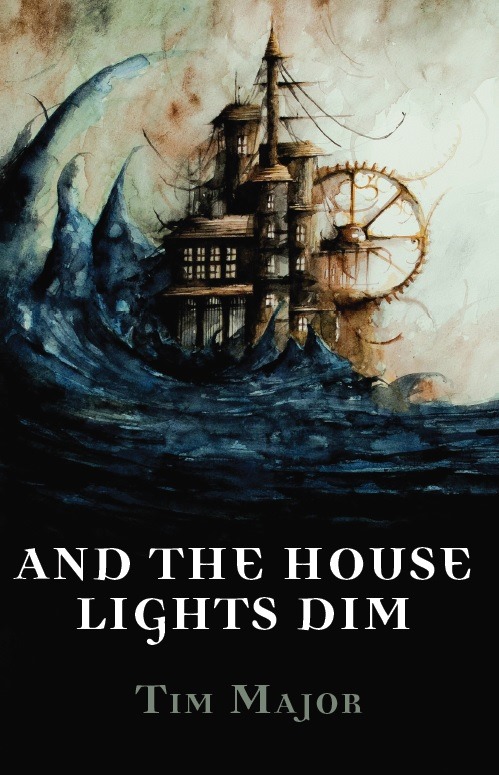
Tim Major’s most recent novels are Hope Island and Snakeskins (both published by Titan Books). His other books include a collection of short stories, And the House Lights Dim, and a non-fiction book about the silent crime film, Les Vampires. His stories have appeared in Interzone, Best of British Science Fiction, Best British Fantasy and Best Horror of the Year

1. Tell us three things about yourself.

#1 Despite being a writer and editor of fiction, I have a Maths subject background. I did a Maths degree at university, then got into publishing via educational materials, working first on Maths textbooks. No regrets, but in retrospect I would have far more enjoyed an English degree, and I’m ashamed of the gaps in my knowledge of classic literature.

#2 What’s worse is that I ought to have known better, even back then. My hobbies have always involved writing. When I was a kid I’d borrow my mum’s electronic typewriter and transcribe my favourite Just William stories. I created Doctor Who fanzines with my best friend and then, when he lost interest, entirely on my own, and sold them for a good profit. I’ve been the editor of two small-press magazines (The Quiet Feather, The Singularity) and, more recently, co-editor of the British Fantasy Society’s fiction journal. The idea of me wanting to spend my life doing anything other than working with words is absurd.

#3 Related to #2, I was the biggest Doctor Who fan when I was growing up. My first short story was a fan-fiction sequel to the Cyberman story ‘Silver Nemesis’. With a group of school friends, I built a Dalek out of aluminium cans, which reached the final of a national competition. We were invited to take it to Westminster Bridge to re-enact the famous scene from The Dalek Invasion of Earth, and our Dalek (but not us) was featured on Blue Peter, alongside my hand-drawn schematics. But we didn’t get Blue Peter badges – I’m still sore about that.

2. Many writers have said the COVID-19 outbreak and the lockdown have made it harder for them to create. Have you found this? Has the outbreak affected you as a writer and if so, how?

For the first three weeks, I couldn’t write anything at all. Part of that was practical – my wife and I have two sons, aged 3 and 6, and of course we’re now home-schooling them, and even without that responsibility, their 24-hour presence in the house can be dizzying and tiring (but just as often great fun, obviously). But the other side of it was that writing felt trivial at first, compared to what’s going on right now. After three weeks, a mental switch flipped, and writing seemed vital again – that is, regardless of the state of the world, it’s vital to keep my mind active. Plus, I’ve made being a writer such a fundamental part of my identity that without it, I don’t know who I am.

It’s not easy finding time, though, given that around 7 hours of each day is dedicated to my kids (5 hours of home-schooling/entertaining, 2 hours of either morning or bedtime routine). But my wife and I are lucky in that we’re both freelance editors, and we’ve had setups similar to this one before. We’re pretty adept at finding free time, and allowing each other space when possible, and once we’ve met our deadlines, we’re good at claiming the remaining time to follow our interests. Recently, I’ve been getting around five hours a week of writing time, which is enough to keep the progress going on a novel I’m planning.

I’m reading a lot more than usual though, which is unexpected, and is all good fodder for writing. And I’m filling some of the classic-literature gaps that I mentioned earlier!

3. What was the first thing you had published?

I’m guessing my self-published Doctor Who fan fiction at age 10 doesn’t count… My first short story was accepted for publication in 2013 by a horror magazine called Sanitarium. They even made it the cover story – I was thrilled. My first book was a novella, Carus & Mitch, in 2015. That was my big ambition: to have a book on my shelf with my name on the cover. As it turns out, that delight doesn’t wear off.

4. Which piece of writing are you proudest of?

This may seem a neat coincidence, but I’m very proud of my new novel, Hope Island, which just happens to be published right about now (it’s already out in the US, and 8th June in the UK). It was also the easiest time I’ve had writing a novel. Here’s hoping that correlation will continue…

5. …and which makes you cringe?

Nothing that’s been published, I don’t think. But when I started writing, I decided to write at least two ‘trunk’ novels for practice, before attempting to inflict any of my work on the world. The first two were YA novels, and, as expected, they were awful, but I learned a huge amount that I wouldn’t have been able to learn theoretically. Also, the first few chapters of the second novel became the basis of Carus & Mitch, which acted as my calling card in the UK genre writing scene, and did me a lot of favours.

6. What’s a normal writing day like?

Let’s imagine we’re not in the midst of lockdown… I’ve always been a slow and steady writer, managing a little on most days, which all adds up. Usually, I’d take the kids to school, then write for a couple of hours before burning out sometime before lunch – at which point switching to my day job of editing (usually fiction, but sometimes educational materials) feels far more a pleasure than a chore. I genuinely like editing, whether it’s my own work or other people’s – it’s my flow state.

7. What work of yours would you recommend for people on lockdown and in need of a good book?

I’m trying to avoid the temptation for self-publicity, but I can’t quite resist it… As I say, Hope Island is out on 8th June. It’s about a British mother and her daughter trying to reconnect on a visit to a remote island off the coast of Maine. They encounter creepy children, a strange artistic community, an archaeological dig… and then there are a bunch of murders and it all gets weird. Like I say, I’m really proud of it.

8. What are you working on now?

I’ve just finished up a Victorian fantasy, and now I’m planning a novel that is undoubtedly an expression of my mania during lockdown. Three parallel strands, three different genres, a cast of at least 50… Despite being so busy with the kids and despite the constant anxiety of the real world, I needed a hobby project to occupy me totally in my brief time alone, and this is it. It might end up taking me a while to write, though.