Author and Scriptwriter

'Among the most important writers of contemporary British horror.' -Ramsey Campbell

Friday, 5 June 2020

The Lockdown with... Marion Pitman


Born in the middle of the 20th century, prevented by depression and anxiety from ruling the world, Marion Pitman likes detective stories, folk music and watching cricket. She sells second-hand books, more in the interests of re-homing the books than of making a living. She also writes poetry, which is rather like being a manufacturer of high-class gas mantles, however good they are nobody wants them.

1. Tell us three things about yourself.

a. One of my favourite places to write (in previously normal times) was the busy lounge of a large hotel.
b.I LOVE hot weather, if I could I would spend six months in each hemisphere and not do winter at all.
c. I have never managed to learn to drive, despite wearing out three driving instructors.

2. Many writers have said the COVID-19 outbreak and the lockdown have made it harder for them to create. Have you found this? Has the outbreak affected you as a writer and if so, how?

On the one hand, the anxiety makes it harder to concentrate, but on the other, I have more time, as I am staying with my partner rather than at my house; and I have always found writing to be a good refuge from unmanageable reality. I've written and submitted more short stories than usual, certainly.

3. What was the first thing you had published?

Well, ignoring poetry in school and parish magazines, it was either 'Dead and Alive' in the Fontana Book of Horror, or 'The Seal Songs' in 19 magazine. Both about 1979, if memory serves.

4. Which piece of writing are you proudest of?

Eek, there's a question. Probably the unpublished novel that is too short for any market.

5. …and which makes you cringe?

Probably another unpublished novel that I can hardly bring myself to look at, it's so full of me being depressed.

6. What’s a normal writing day like?

Sorry, you'll have to ask somebody normal.

7. What work of yours would you recommend for people on lockdown and in need of a good book?

Well, my short story collection, Music in the Bone (Alchemy Press) has been well spoken of, and has something for everyone – fantasy, horror, SF, humour, Western...

8. What are you working on now?

Good question. Just finished my second Sherlock Holmes pastiche (both of which should be due out before too long), and an occult detective story. Wondering if I should get back to the too-short novel and see if I can lengthen it...

Monday, 1 June 2020

The Lockdown with... Tim Major

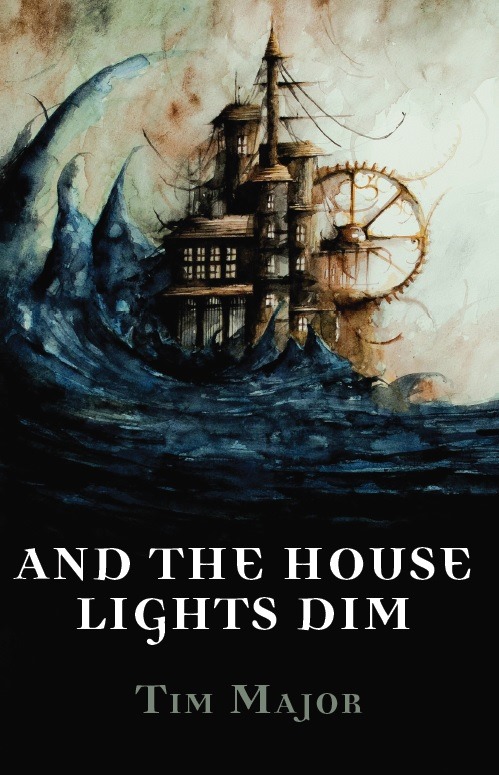
Tim Major’s most recent novels are Hope Island and Snakeskins (both published by Titan Books). His other books include a collection of short stories, And the House Lights Dim, and a non-fiction book about the silent crime film, Les Vampires. His stories have appeared in Interzone, Best of British Science Fiction, Best British Fantasy and Best Horror of the Year. 

1. Tell us three things about yourself.

#1 Despite being a writer and editor of fiction, I have a Maths subject background. I did a Maths degree at university, then got into publishing via educational materials, working first on Maths textbooks. No regrets, but in retrospect I would have far more enjoyed an English degree, and I’m ashamed of the gaps in my knowledge of classic literature.

#2 What’s worse is that I ought to have known better, even back then. My hobbies have always involved writing. When I was a kid I’d borrow my mum’s electronic typewriter and transcribe my favourite Just William stories. I created Doctor Who fanzines with my best friend and then, when he lost interest, entirely on my own, and sold them for a good profit. I’ve been the editor of two small-press magazines (The Quiet Feather, The Singularity) and, more recently, co-editor of the British Fantasy Society’s fiction journal. The idea of me wanting to spend my life doing anything other than working with words is absurd.

#3 Related to #2, I was the biggest Doctor Who fan when I was growing up. My first short story was a fan-fiction sequel to the Cyberman story ‘Silver Nemesis’. With a group of school friends, I built a Dalek out of aluminium cans, which reached the final of a national competition. We were invited to take it to Westminster Bridge to re-enact the famous scene from The Dalek Invasion of Earth, and our Dalek (but not us) was featured on Blue Peter, alongside my hand-drawn schematics. But we didn’t get Blue Peter badges – I’m still sore about that.

2. Many writers have said the COVID-19 outbreak and the lockdown have made it harder for them to create. Have you found this? Has the outbreak affected you as a writer and if so, how?

For the first three weeks, I couldn’t write anything at all. Part of that was practical – my wife and I have two sons, aged 3 and 6, and of course we’re now home-schooling them, and even without that responsibility, their 24-hour presence in the house can be dizzying and tiring (but just as often great fun, obviously). But the other side of it was that writing felt trivial at first, compared to what’s going on right now. After three weeks, a mental switch flipped, and writing seemed vital again – that is, regardless of the state of the world, it’s vital to keep my mind active. Plus, I’ve made being a writer such a fundamental part of my identity that without it, I don’t know who I am.

It’s not easy finding time, though, given that around 7 hours of each day is dedicated to my kids (5 hours of home-schooling/entertaining, 2 hours of either morning or bedtime routine). But my wife and I are lucky in that we’re both freelance editors, and we’ve had setups similar to this one before. We’re pretty adept at finding free time, and allowing each other space when possible, and once we’ve met our deadlines, we’re good at claiming the remaining time to follow our interests. Recently, I’ve been getting around five hours a week of writing time, which is enough to keep the progress going on a novel I’m planning.

I’m reading a lot more than usual though, which is unexpected, and is all good fodder for writing. And I’m filling some of the classic-literature gaps that I mentioned earlier!

3. What was the first thing you had published?

I’m guessing my self-published Doctor Who fan fiction at age 10 doesn’t count… My first short story was accepted for publication in 2013 by a horror magazine called Sanitarium. They even made it the cover story – I was thrilled. My first book was a novella, Carus & Mitch, in 2015. That was my big ambition: to have a book on my shelf with my name on the cover. As it turns out, that delight doesn’t wear off.

4. Which piece of writing are you proudest of?

This may seem a neat coincidence, but I’m very proud of my new novel, Hope Island, which just happens to be published right about now (it’s already out in the US, and 8th June in the UK). It was also the easiest time I’ve had writing a novel. Here’s hoping that correlation will continue…

5. …and which makes you cringe?

Nothing that’s been published, I don’t think. But when I started writing, I decided to write at least two ‘trunk’ novels for practice, before attempting to inflict any of my work on the world. The first two were YA novels, and, as expected, they were awful, but I learned a huge amount that I wouldn’t have been able to learn theoretically. Also, the first few chapters of the second novel became the basis of Carus & Mitch, which acted as my calling card in the UK genre writing scene, and did me a lot of favours.

6. What’s a normal writing day like?

Let’s imagine we’re not in the midst of lockdown… I’ve always been a slow and steady writer, managing a little on most days, which all adds up. Usually, I’d take the kids to school, then write for a couple of hours before burning out sometime before lunch – at which point switching to my day job of editing (usually fiction, but sometimes educational materials) feels far more a pleasure than a chore. I genuinely like editing, whether it’s my own work or other people’s – it’s my flow state.

7. What work of yours would you recommend for people on lockdown and in need of a good book?

I’m trying to avoid the temptation for self-publicity, but I can’t quite resist it… As I say, Hope Island is out on 8th June. It’s about a British mother and her daughter trying to reconnect on a visit to a remote island off the coast of Maine. They encounter creepy children, a strange artistic community, an archaeological dig… and then there are a bunch of murders and it all gets weird. Like I say, I’m really proud of it.

8. What are you working on now?

I’ve just finished up a Victorian fantasy, and now I’m planning a novel that is undoubtedly an expression of my mania during lockdown. Three parallel strands, three different genres, a cast of at least 50… Despite being so busy with the kids and despite the constant anxiety of the real world, I needed a hobby project to occupy me totally in my brief time alone, and this is it. It might end up taking me a while to write, though.


Friday, 29 May 2020

The Lockdown with... Conrad Williams


Conrad Williams was born in 1969. He is the author of nine novels (HEAD INJURIES, LONDON REVENANT, THE UNBLEMISHED, ONE, DECAY INEVITABLE, LOSS OF SEPARATION, DUST AND DESIRE, SONATA OF THE DEAD and HELL IS EMPTY), four novellas (NEARLY PEOPLE, GAME, THE SCALDING ROOMS and RAIN) and three collections of short stories (USE ONCE THEN DESTROY, BORN WITH TEETH and I WILL SURROUND YOU). He has won two major prizes for his novels. ONE was the winner of the August Derleth award for Best Novel, (British Fantasy Awards 2010), while THE UNBLEMISHED won the International Horror Guild Award for Best Novel in 2007 (he beat the shortlisted Stephen King on both occasions). He won the British Fantasy Award for Best Newcomer in 1993. He won another British Fantasy Award, for Best Novella (THE SCALDING ROOMS) in 2008. In 2009 he was Guest of Honour at the World Horror Convention. He edited the anthologies GUTSHOT, which was shortlisted for both the British Fantasy and World Fantasy Awards, and DEAD LETTERS. He is an associate lecturer at Edge Hill University and an external moderator for St Mary’s University. He lives in Manchester, UK, with his wife, three sons and a cheeky Labrador called Coco.

1. Tell us three things about yourself. (If you’ve done this previously, ideally tell us three different things than last time!)

I’m a purple belt at karate, I hold a PhD by publication from Huddersfield University, and I once had a brief discussion with Alan Alda about lifts in a Los Angeles hotel.

2. Many writers have said the COVID-19 outbreak and the lockdown have made it harder for them to create. Have you found this? Has the outbreak affected you as a writer and if so, how?

My parents died within a month of each other at the start of the year (not COVID-19 related), so I’ve been trying to process the fallout from that. It’s causing me more creative and emotional disruption than the coronavirus, to be honest.


3. What was the first thing you had published?

‘Dirty Water’, a short story back in 1988. But I told you that first time around, so I’ll go with my first novel, which was ‘Head Injuries’ in 1998, written on a PC with a 10” screen while living in a B&B in Morecambe during the winter. Over those six months, studying for an MA in Creative Writing at Lancaster University, I won a British Fantasy Award (Best Newcomer), went out with a girl called Amanda who dumped me for a girl called Reg and received a visit from Nicholas Royle, Mark Morris and Joel Lane. I took acid at Christmas, wrote 5000 words in a couple of hours and watched ‘Carnival of Souls’. I woke up to find a Post-it note stuck to the window, a warning I’d written to myself the night before: ‘Conrad, man cannot fly’. Some of my acid experiences found their way into the novel, including tiny babies’ faces screaming behind the skin of my knuckles. It was an interesting six months.

4. Which piece of writing are you proudest of?

I mentioned ‘Loss of Separation’ last time round, so I’ll go with a novella, ‘Rain’, which was a finalist for the British Fantasy Award but was beaten by ‘The Scalding Rooms’, another of my novellas. I still have a feeling the wrong book won.

5. …and which makes you cringe?

The hundreds of poems I wrote between 1985 and 1987. They included ‘Black Butterfly’, which was a paean to the vagina. Jesus Shivering Christ. When we last moved house I burned them in the garden and felt not one iota of regret about it.

6. What’s a normal writing day like?

I don’t have writing days any more. I tend to snatch moments here and there. I miss trips out to the café for an hour to write notes while listening to music.

7. What work of yours would you recommend for people on lockdown and in need of a good book?

I’d love my Joel Sorrell trilogy to get a bit more attention.

8. What are you working on now?

I’ve just finished a ghost story I’ve been tinkering with (slowly) over the past ten years. It was called ‘House of Slow Rooms’ when I mentioned it to you last time. It’s now called ‘One Who Was With Me’ and will be published by Earthling as part of their Halloween series this year. I’m ten thousand words into a fourth Joel Sorrell novel called ‘Catching Up with Dead Men’. And I’m also sketching out a plan for a horror novel called ‘The Backs’, although I’ve been doing that for four years now… I don’t want another decade to go by before I finish this one.

Monday, 25 May 2020

The Lockdown with... Matthew M. Bartlett

Matthew M. Bartlett is the author of Gateways to Abomination, The Stay-Awake Men and Other Unstable Entities, Creeping Waves, and other books of supernatural horror. His short stories have appeared in a variety of anthologies and journals, including Lost Signals, Vastarien, Year’s Best Weird Fiction Vol. 3, and Ashes & Entropy. He has recorded two albums for Cadabra Records, Mr. White Noise and Call Me Corey, both with backing music by Black Mountain Transmitter. He lives in Western Massachusetts with his wife Katie Saulnier and their cats Peachpie and Larry.

1. Tell us three things about yourself.
I don’t feel comfortable unless I have a pen – almost anything but a ball-point—in my right front pocket. 

I am susceptible to excessive sentimentality, though
you might not be able to tell that from most of my writing. 

I started out in college as a theater major, but I found the egos of my fellow students overwhelming.


2. Many writers have said the COVID-19 outbreak and the lockdown have 
made it harder for them to create. Have you found this? Has the
outbreak affected you as a writer and if so, how? 
I have found it more difficult, especially in the first few weeks of March. Even before the pandemic, work-stress had taken a toll on my productivity. When the seriousness of the pandemic became apparent, I was almost completely taken up with worry, about my job and the virus and the economy – almost like a mantra of worst-case-scenario what-ifs--and took comfort in distractions like social media (hiding all virus-related posts) and Words With Friends. Plus, I typically write before work, but I had been switched to a schedule that included days when I worked at home. That threw off the self-imposed structures of my mornings. I still was able to complete one story and start several others, and my productivity has begun to climb again, though not to the heights of early 2019, not yet.

3. What was the first thing you had published? 
A very short piece from my debut collection. The contract was drawn up before I self-published the book, but the story came out some time after. The story was called Pharaoh.

4. Which piece of writing are you proudest of? 
Maybe the stories in my collection The Stay-Awake Men and Other Unstable Entities. Those were an homage to my favorite kind of weird fiction, and were not interrelated, as were stories in my other books. But also I’m extremely proud of the short story Rangel, one of the first longish
pieces I wrote, and it ended up in the Year’s Best Weird Fiction.

5. …and which makes you cringe?
I’m not too cringey about anything I wrote except maybe some very naïve “political” stuff I wrote as a teenager—come to think of it, I got one of those published in a punk zine, so THAT was the first thing I had published. I do cringe at the fact that I completely unconsciously stole a phrase from a writer I deeply admire, and didn’t notice it until after the story it was in
was published.

6. What’s a normal writing day like? 
I sit down in front of the computer around 7 am and write until I think it’s getting sort of late and I need to shower and get ready for work, usually a half-hour to forty-five minutes of writing/editing/research. Sometimes I’ll write a few paragraphs or pages if I’m at the computer on the weekend and
something strikes me.

7. What work of yours would you recommend for people on lockdown and in need of a good book? 

Creeping Waves is my longest book, and contains some stuff I’m really proud of. When I wrote that book I was firing on all pistons. It gives a view of my range, and I think people tend to come back to it more than once.

8. What are you working on now? 

A short story of grotesque eroticism and radio.

Buy Creeping Waves here.
Buy The Stay-Awake Men here.
Buy Gateways to Abomination here.
Buy Call Me Corey here. 

Friday, 22 May 2020

Things Of The Week: 22nd May 2020 (Hell Is Children, Kanaida, Winter Fruit, The Teardrop Girl)

Hi there. Hope you're all weathering the pandemic reasonably well. We're still at home, and I'm still writing stuff. What else is there to do, really?

That includes some new stories. 'Kanaida', a tale of unintended consequences, has just been published over at Unsung Stories online. You can read it here. I hope you enjoy it.

I've also published two new stories over on my Patreon. You can read 'Hell Is Children' (a conclusion I expect a few of my friends with families have come to while on lockdown) either there or on my Ko-fi page. It's also now available as an audio reading.

The second story, 'Winter Fruit', is a grimly humorous tale of an old lady's hard-won peace in the middle of a near-future war. This one's pay-walled - you have to sign up to my Patreon to read it, but at as little as a dollar a month that's good value.

Finally, I've started uploading excerpts from my latest novel, The Teardrop Girl, to Patreon, a mixture of adventure thriller and dark fantasy set in Eastern Europe in the aftermath of the First World War. When marauding troops of the Freikorps murder a young Latvian girl, mysterious forces bring her back to life to hunt down the German commander - a mission that may decide the fate of the world.

The opening chapters of the novel are available for all to read. A second excerpt is also up now, exclusively available to members of my Patreon Book Club.

Hope you're all keeping well, and have a good weekend, folks.

Friday, 20 March 2020

Things of the Week Friday 20th March 2020: Free Fiction on Patreon and PDF Download, plus And Cannot Come Again News


I hope you're all keeping well. I've been signed off work for a further period, which is probably for the best as the coronavirus pandemic continues - in addition to my MH issues, Cate and I are both in 'at risk' categories...

StokerCon, like most events scheduled over the next few months, has been cancelled, but the new edition of And Cannot Come Again - including the previously unpublished stories 'In The Shelter' and 'Black Is The Morning, White Is The Wand' - will still be released by Graeme Reynolds' Horrific Tales next month.

In the meantime...

With increasing numbers of people forced to remain at home, a number of authors are making work available to readers either free of charge or at reduced rates. They include Sarah Pinborough, who's made her early horror novels for Leisure Books - The Taken, Breeding Ground, Feeding Ground and Tower Hill available, or Adrian Tchaikovsky, who's put together an ad hoc collection of short fiction, including a collaboration with the fab and lovely Keris McDonald. This article by Philip Fracassi for the Book and Film Globe lists a bunch of others.

In the same spirit, I've decided to make my two Gray Friar Press collections, Pictures Of The Dark and The Condemned, likewise available as free downloads. The Google Drive folder containing them - and any future titles I add - is here. In addition, I've made the fiction I've uploaded to my Patreon page, including the novelette Roads Heading South and the SF/horror/comedy/thriller The Mancunian Candidate, available to the public at no charge.

Hope these provide some enjoyment. If you have work you're making available in this way that hasn't been mentioned here or in the Fracassi article, let me know and I'll add a link below.

Keep well, take care and hold steady, and have a good weekend.

Simon x

Friday, 6 March 2020

Things of the Week, Friday 6th March 2020: Best Horror of the Year 12, Cate Gardner Collection and more...

It's been a strange week.

I'm currently still off work, and haven't been venturing out much, so the unfolding coronavirus epidemic's had a slightly unreal quality. We had been thinking of going to Manchester this weekend, to meet Catana Chetwynd - we love her comics - but she's cancelled her tour due to the outbreak. There've been so many pandemic scares over the last decade or two that they've taken on a 'cry wolf' quality (although one of the reasons many of these outbreaks haven't been worse will have been prompt action and treating them as an urgent crisis) but it looks as though this one will be the real thing. I hope it's under some sort of control sooner rather than later (although with the kind of brain-donors we have in charge here and in the US, I'm not getting my hopes up too high), and to see old friends and Facebook friends, and maybe make some new ones too, at StokerCon in Scarborough.

On a happier note, this week I received some fantastic news when Ellen Datlow selected my story 'Below' (originally published in the mighty Paul Finch's Terror Tales Of Northwest England) for inclusion in The Best Horror Of the Year #12.

You can read the full TOC here. I'm in some stellar company, including Gemma Files, Robert Shearman, Joe R. Lansdale and Catriona Ward, not to mention friends such as Ray Cluley and Ren Warom. Great to see S. Qiouyu Lu's excellent 'As Dark As Hunger', which I finally read in Black Static the other week (I'm very behind with my reading), included, and special congratulations to Laura 'Bricklauncher' Mauro, for finally ticking one off her bucket list and making a Datlow anthology! (The first of many, I have no doubt.)

I'm absolutely over the moon about this.

I'm also delighted to report that the first review of Cate's new collection, These Foolish And Harmful Delights, is now up at The Eloquent Page. Of it, Paul Holmes says: "There is an introspective, almost intimate quality to each entry in the collection. Gardner’s powerful writing brings together tales of love and loss, rebellion and empowerment. These Foolish & Harmful Delights encompasses the full gamut of emotions. The stories delicately dance that fine line between dark fantasy and psychological horror. If you enjoy your fiction in the short form and are looking for something memorable, I can confirm that Cate Gardner is the author for you."

Couldn't have put it better myself.


e-ARCs of the new edition of And Cannot Come Again are now available from Horrific Tales, including the previously unpublished stories 'In The Shelter' and 'Black Is The Mourning, White Is The Wand' and an updated introduction from Ramsey Campbell. Still can't get over how amazing Ben Baldwin's cover art is... 

My very cool friend Joely Black is leading a workshop: Making Magical Objects: Experimental Archaeology Meets Creative Writing later this month in Manchester. Joely's a fine writer, whose academic background focuses on religious and magical practices in the ancient world, so she knows what she's talking about. I promised to help spread the word about this event, but sadly it's actually sold out already! Nonetheless, any Mancs who like the sound of it should keep an eye out for future ones.

And that's the lot for now. Have a good weekend, all.